

How To Clean A Dog's Surgical Wound
Knowing how to clean a wound is an important wound intendance skill for preppers — the risks and consequences of an infection go style upwardly during emergencies, simply a few simple steps can prevent a minor problem from blowing upwards into a major one that could turn fatal.
The discovery that microorganisms (such equally leaner) cause infections, and that elementary steps like hand washing and wound intendance easily preclude those infections, was i of the most important milestones in medical history. Scientists discovered that little bit of endeavour saves a ton of lives.
It's pretty uncomplicated: Your skin's principal purpose is to keep strange contamination from getting inside your trunk. When the skin is broken, bacteria and debris get within.
Yous want to clean that junk out before roofing the injury or letting it scab over on its ain, so that you don't trap the contagion inside.
Cleaning a wound is just one step in the wound intendance process:
- Get haemorrhage under control (apply a tourniquet if it'south serious)
- Clean the wound
- If it makes sense to, close the wound with sutures, staples, glue, etc.
- Protect the wound with dressings and bandages
Infection risks greatly depend on the situation: what the wound is like, what kind of contamination got inside, and whether the patient has quick access to professional medical care. There are technical medical classifications, simply it'south pretty unproblematic to understand the risks of a particular wound if y'all simply use your head.
 Getting a small paper cut from a newly-opened stack of printer paper at the function probably won't turn into a big problem. Y'all might become some pus and redness — both of which are signs of a localized infection — only it'll exist fine considering your body tin proceed the infection independent.
The big bug happen when infections overwhelm the patient'southward defence force organization and travel throughout the body.
To make matters worse, immune systems tend to get weaker during bad or prolonged emergencies due to disruptions in sleep, food, stress, and so on.
For example, imagine you're using your survival axe to process downed copse after a hurricane. You fumble a swing and nick your leg. The cut might not seem like a big bargain, but flood waters are full of carrion and other nasty contaminants, some of which got in the wound.
That superficial wound can blow upward into a life-threatening, systemic infection (called sepsis), which is and then compounded by all of the other stuff you're dealing with in that broader emergency and by the lack of professional care.
Utilize your head. Get professional person aid if yous can.
The Prepared teaches survival medicine: what to exercise in emergencies when you can't depend on normal help or supplies. How to make decisions, steps to take, gear to utilize… there's a huge departure in the correct answers between daily life and a survival situation.
You lot agree non to concur us responsible if you cull to do something stupid anyway.
Want more free guides from medical and survival experts delivered direct to your inbox?
Summary of how to make clean a wound:
- When in doubt, clean it out.
- Flushing is the key step. Use lots of make clean, potable water. Don't put chemicals or more contamination in the wound via dirty water, hydrogen peroxide, or other chemicals.
- If a wound is serious and you can become to professional assistance, exercise and then.
- Clean the expanse around the outside of a wound before you clean inside and so that you don't recontaminate your work.
- Y'all can spread/open the wound using your fingers or a clean tool, in society to see all the nooks and crannies where debris might be hiding. Merely don't make the wound worse unless you're in a very serious emergency without help.
- Remove foreign objects (e.g. a nail in the human foot) every bit long equally information technology won't cause more serious impairment or bleeding.
- Choice out any tangible debris before flushing. You may need to loosen it up with a toothbrush if flushing alone won't remove information technology.
- Don't flush deep, narrow puncture wounds (due east.g. a nail straight into the thigh) because the flushing only pushes contamination further down. Allow the outgoing blood button away what it tin can.
Why y'all should trust u.s.
Your three guides have 80 years of combined experience teaching or using these skills:
- Website
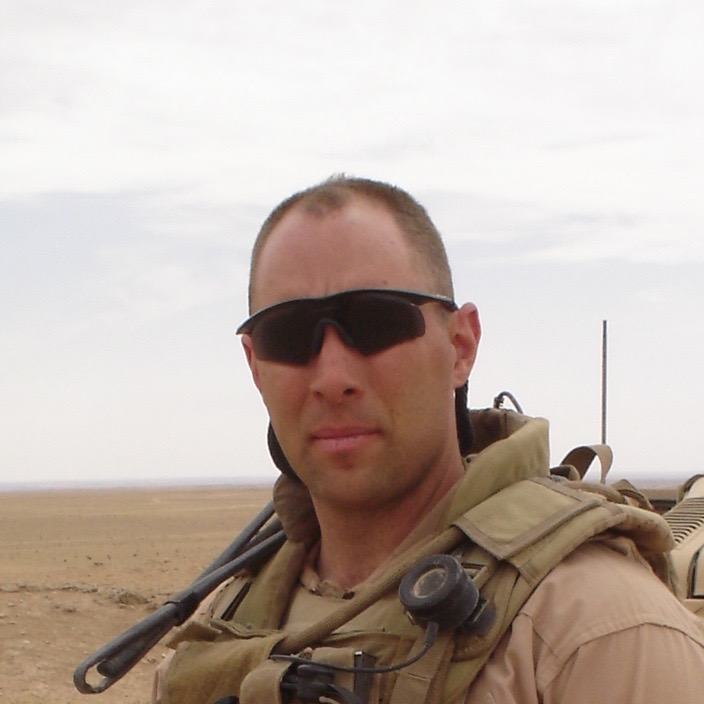
Tom Rader. 18 years in emergency medicine. Former paramedic and Navy Corpsman (medic) with Marine Recon in Iraq. Teaches wilderness medicine nationwide to students including wildland firefighters, kickoff responders, and remote populations..
- Website
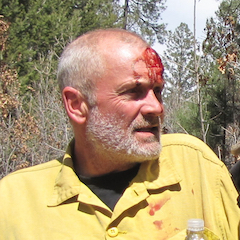
Cabot Stone has worked in emergency medicine for more than 38 years across 6 continents, including viii years in Africa. He'due south been a flying paramedic, gainsay medicine teacher, and firefighter.

Mike Ruane retired after 27 years in emergency medicine equally a paramedic and nurse. His career spanned from the streets of east Oakland to teaching armed services special warfare medics.
Most important: flush the wound with make clean water
The nearly important part of wound care is clean drinking water, and lots of it.
You do not demand sterile, distilled, or saline water. Any water that's safe to drink is prophylactic to utilise to flush a wound: tap h2o, professional bottled h2o, tap water that'south been in a hydration bladder or canteen for a few days, the output from your survival h2o filter or purification tablets, or the beverage h2o stored in your camping or emergency water cans are all fine.
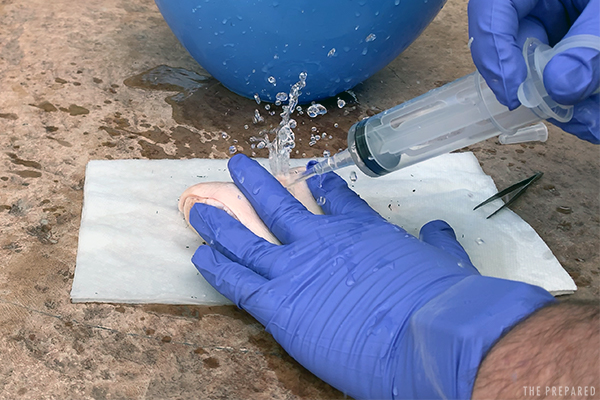
Y'all can flush by simply pouring h2o from a container. But having some force per unit area behind the water is helpful considering it removes contamination with greater force and speed. Water direct from a normal household tap is usually the right amount of pressure.
This is where a syringe tin can be helpful because you can push the h2o out in a focused jet.
Tip: If yous don't accept a syringe, you can poke holes in a disposable water bottle cap to make your own squeezable sprinkler.
Tin you lot clean wounds with iodine or hydrogen peroxide?
Short reply: No, don't put chemicals in open tissue.
Never use hydrogen peroxide — it delays the healing process and amercement healthy cells.
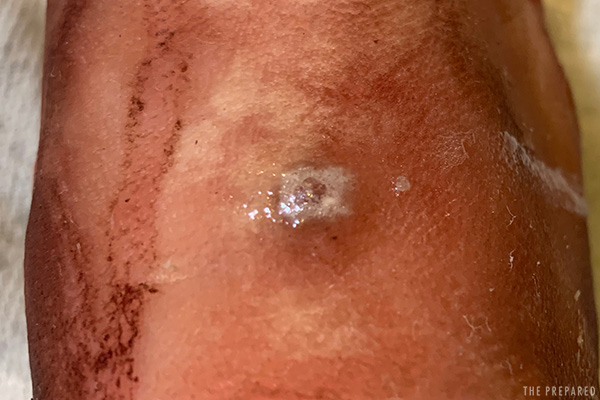
Using iodine depends on whether y'all'll have access to professional medical care within 48 hours. When in dubiety, assume yous won't go help.
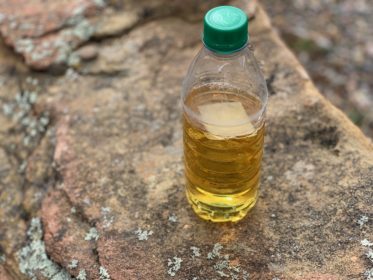
The problem with iodine is that it works well in the short term, but it can practice more harm than proficient if the patient doesn't get on antibiotics within two days. Recent studies show that bacteria rebounds to college levels 48 hours after iodine was applied than if there was no iodine used at all. As well, there'south no articulate data that iodine flushing works ameliorate than clean-water flushing to begin with.
That'southward why the pros use iodine in hospitals simply wilderness medics don't utilise it in the field.
If yous don't have access to enough drinkable h2o merely experience confident you'll get to proper intendance before long, y'all can create your own flushing solution by mixing iodine with the cleanest (but obviously not gross) water you can find.
Mix enough iodine into the water so that it has the color of weak tea, a faint dark-brown. It doesn't have much. If yous have iodine wipes in your kit, you lot can drib a couple in the water for the same effect.
Unproblematic wounds
Simple and small wounds in daily life, like slicing your finger with a kitchen knife, are by and large handled past running clean water over the wound to affluent out any contagion.
Inspect the wound to see if any visible debris wasn't removed past flushing, such equally food bits from the kitchen knife stuck in a corner.
Thin or angled cuts make it hard to see downwardly into the wound. You lot can spread the opening with your fingers or a tool, just don't spread it far enough to cause more than damage.
That's it. Merely throw on a band-assistance one time the contamination is removed.
Serious wounds
The take a chance of infection climbs when the connective tissues (fascia) are penetrated in a deep wound. A compound bone fracture, fish hook through the hand, gunshot wound, or deep gouge on a thigh during a car accident are all examples.
Work fast, only don't wait a quick set. Even a 2-three inch long wound can accept upwards of half an hour to clean outside of a hospital surroundings.
It will as well be a pretty uncomfortable process for your patient unless you have done something to numb the expanse (or numb the patient). Be prepared for them to laissez passer out — place them in a safe position in case they exercise, and work fast to endeavour and cease before they wake support.
Start by cleaning the area effectually the wound
You don't desire surface grime around the wound to observe its way in after you've cleaned. Serious wounds usually have blood swishing around, or in that location might be clay or grease nearby.
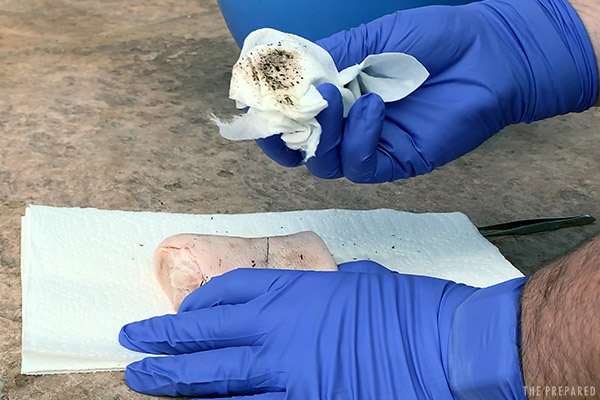
Use water, gentle lather, or moisture wipes to clean the skin around the wound. Remove or cutting clothing if needed. You don't intentionally use soap within the wound, but effectually information technology, but don't freak out if a little soapy water gets within.
Tip: Use medical gloves and so you lot don't introduce more contamination to the wound.
Tip: If you lot are concerned nigh hair on the skin around the wound, remove it with clippers. Exercise not shave the area as shaving might damage the skin and increase the possibility of infection.
Tin you see what you're doing?
For nasty wounds, you may want to use a tool instead of your fingers to hold the wound open so yous can see what you lot're doing, directly hit all of the tissue with h2o, and have both easily to piece of work with.
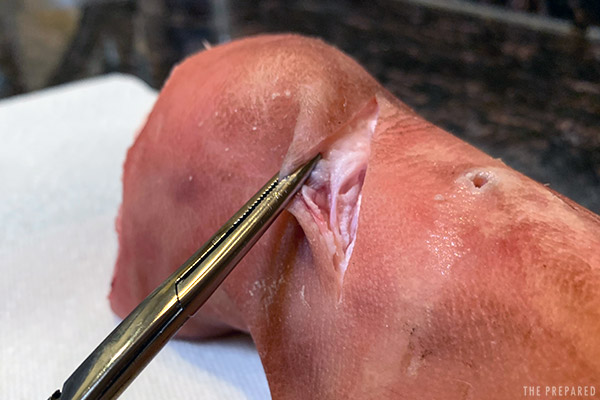
Forceps work well because you can clamp on the edge of the tissue and the weight of the forceps will keep the wound open. The pliers on your survival multi-tool can work, too.
If there are avulsed (torn) $.25 of skin effectually the edges of the wound, you will need to elevator these and irrigate nether them.
Tip: Headlamps are perfect for medical kits considering they continue both hands free and illuminate what you're looking at.
Tip: A magnifying drinking glass can help you see small debris and pockets in the wound. Or, if someone else is helping you, they can hold their phone over the wound with the camera mode zoomed in while you scout the screen.
Remove impalements (if appropriate)
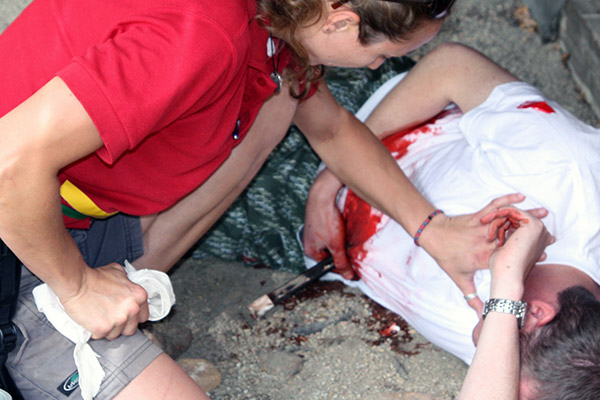
Students in our survival medicine courses frequently ask questions like "Should I remove an pointer shot through a leg?" or "If in that location'southward a nail in someone's caput, should nosotros pull information technology out?"
In general, yes, you should remove the impalement. It's hard to clean and care for a wound with a fish hook or nail sticking out, and the object probably brought a lot of contamination with it.
Just yous don't want to make things worse by removing the impalement. You lot should leave an object in:
- If information technology seems serious — more similar a blast through the foot than a staple in the skin — and you tin get to professional medical aid in 1-2 hours, then get out it in and get to assistance.
- If removing it will cause massive bleeding or serious injury. Think of a pocketknife in the heart or screwdriver in the brain.
- If it'due south in the eyeball.
- If yous'll cause a lot more damage by removing it. Pic a serrated pocketknife bract — those fiddling hooks and crannies are designed to do impairment when pulled out.
Sometimes it'due south hard to know what you're dealing with. So if you lot try to remove the object and information technology either feels stuck or creates a huge amount of pain for the patient, leave it in.
For example, an teacher nosotros teach with one time responded to a snow skier who had a tree branch go through his boot and foot. When they tried removing the branch, it barely budged, and the skier cried out. They later discovered the seemingly-simple branch had a knot within the foot, wedged between the small foot bones.
Remove big or stubborn debris
Use make clean tweezers or something similar on your multitool to remove tangible debris. That may include cutting away obviously-expressionless peel.
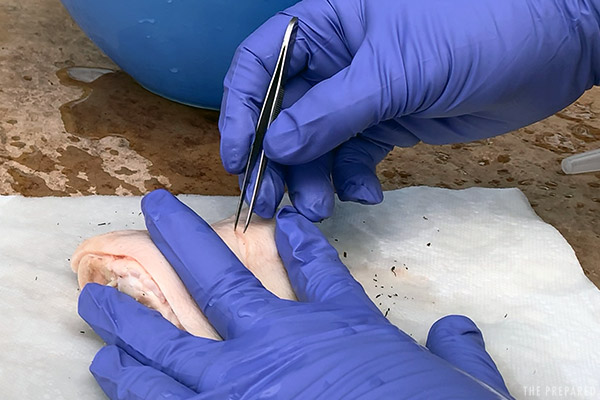
Tip: If you don't have a tool you think is clean enough to touch the wound, immerse the best selection you take in humid h2o for 20 minutes or soak it in >70% isopropyl booze for xxx minutes.
Some injuries force droppings deep into the tissue — like rubbing table salt and pepper into a raw steak before searing. A archetype case is road rash, where small road 'pebbles' are forcefully pushed into the tissue.
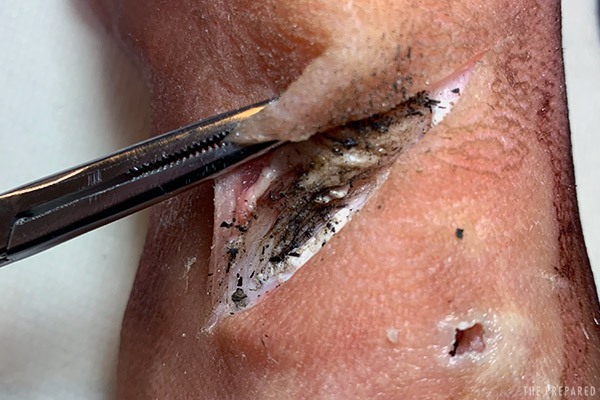
If it looks similar minor debris is lodged in in that location well plenty that the upcoming water pressure alone won't push it out, this is where you can use a soft toothbrush to scrub it loose. Yous can use harder scrubbers if needed — merely endeavour to brand them as clean and soft every bit possible. Speaking from personal experience: this really sucks as a patient, but it has to be done.
Affluent and remove any leftover debris
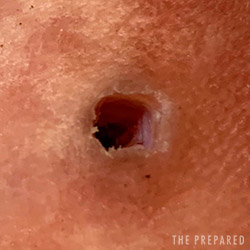 Follow the aforementioned steps as a simple wound: flush with copious amounts of water and pick out whatsoever leftover debris.
Punctures, such equally a long animal tooth bite, are usually harder to affluent out because it's a deep-but-narrow wound. In fact, using a higher pressure affluent could really pack droppings further downward in the wound.
You might come across advice to utilize iodine as a drop-in disinfectant instead of a flushing solution in this situation. We nevertheless don't recommend using iodine for the reasons discussed above. Instead, better to let (fifty-fifty encourage) bleeding to push contagion out from the within.
How ofttimes should yous clean a wound?
Once you've finished the previous steps and cleaned the wound, it'southward time to (perhaps) close information technology, so bandage it.
If the wound was serious enough where there's still open tissue (not scabbed over) after a calendar week, simply follow the same process equally the outset time.
How to clean an infected wound
Excessive pus or discolored belch are signs of a serious (but still localized) infection. Clean the wound once more if you can't become to medical help.
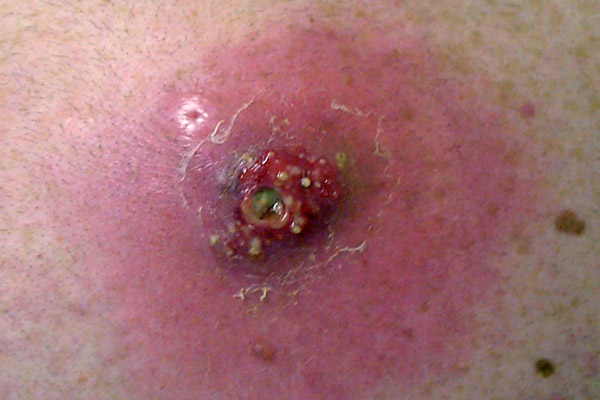
An infected wound is cleaned the same mode equally a new wound: remove damaged tissue and strange objects (a process called "debriding"), then flush with copious amounts of make clean water.
You may accept to push button on the wound, squeeze the edges, or puncture the top of an abscess (i.e. boil) to help drain the pus. This will also help relieve localized pain.
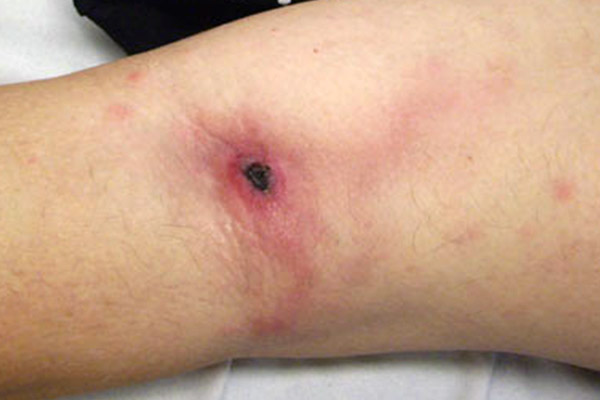
Fever, malaise, or cerise streaking moving away from the wound are signs of sepsis, a very serious infection. If you lot can't go to medical aid, clean the wound again and utilise appropriate antibiotics you may have on mitt (ceftriaxone, azithromycin, ciprofloxacin, vancomycin, and piperacillin-tazobactam).
Tetanus infection risk and treatment
Even if the injury seems mild plenty to not become to the doc, Tetanus is a serious infection — with 30-40% mortality rates — acquired by Tetanus bacteria in a wound.
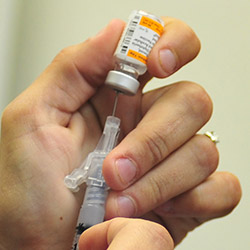 You lot should be concerned virtually Tetanus if whatever caused the injury made a deep puncture and has been exposed to soil, dust, and/or manure (all places where Tetanus bacteria are commonly constitute).
Ask if the patient has had their booster shot inside the last 10 years. If the answer is annihilation but a solid yep, go professional help. The most common treatment is a shot of Tetanus Immune Globulin, merely it's only constructive before infection sets in (roughly iii days), so don't delay.
If you tin't get to help, the best style to combat Tetanus is through air exposure on the wound (and luck).

Source: https://theprepared.com/survival-skills/guides/clean-wound/
Posted by: lebrunbagat1936.blogspot.com
0 Response to "How To Clean A Dog's Surgical Wound"
Post a Comment